

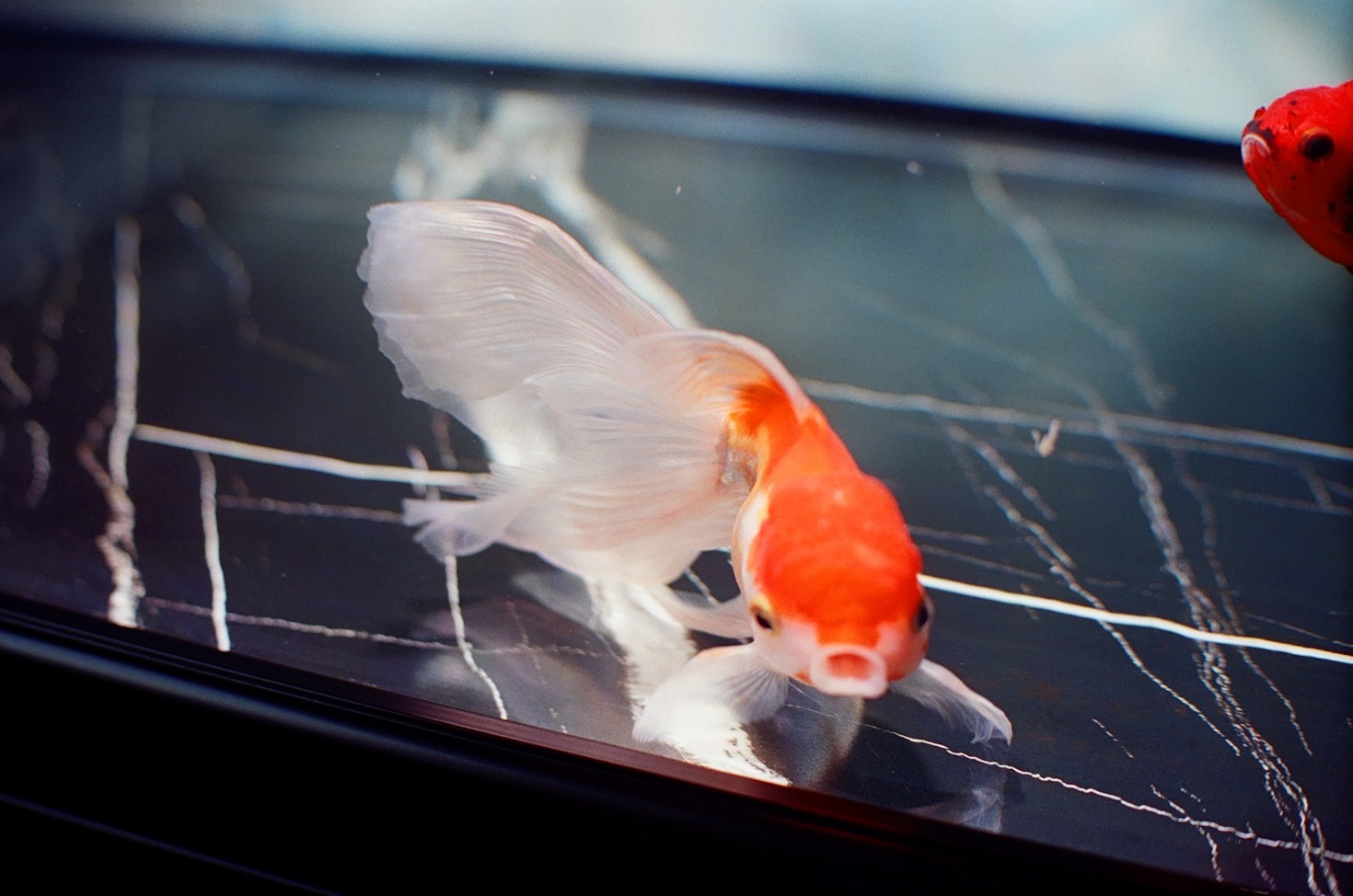
Keeping fish healthy and happy starts with one simple idea: fish live inside their life-support system.
For a dog or cat, the room around them matters. For fish, the water around them is everything. They breathe through it, eat in it, sleep in it, move through it, and absorb changes from it. If the water is stable, clean, and suited to the species, fish have a much better chance of staying healthy. If the water is unstable, even a beautiful tank can become stressful or unsafe very quickly.
The good news is that fish care does not have to be complicated. It does need to be consistent.
Start With the Right Tank
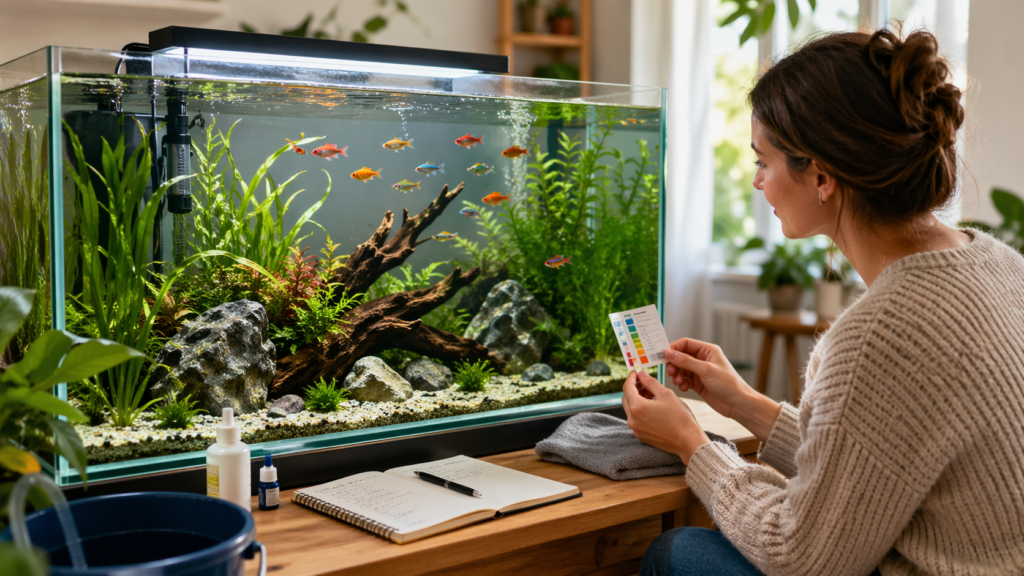
A healthy fish needs enough room to swim, hide, rest, and behave naturally. Tank size matters because larger water volumes are generally more stable than tiny tanks or bowls. Temperature, waste levels, and water chemistry can shift quickly in small volumes, which makes them harder to manage for beginners.
Before choosing a tank, ask:
- How large will the fish be as an adult?
- Is it a schooling fish that needs a group?
- Is it active or calm?
- Does it need open swimming space?
- Does it need plants, caves, sand, rocks, or driftwood?
- Is it compatible with the other fish planned for the tank?
A tank should be selected around the fish’s adult needs, not just around the size of the fish at the store. The Royal Society for the Prevention of Cruelty to Animals notes that fish should be researched before purchase, including adult size, compatibility, and housing requirements. (RSPCA)
Water Quality Is the Foundation
Clear water is not always healthy water.
Aquarium water can look clean while still having unsafe levels of ammonia, nitrite, nitrate, chlorine, chloramine, or pH instability. Poor water quality is one of the most common causes of fish health problems, and Merck Veterinary Manual identifies low dissolved oxygen and high ammonia as two water quality issues most likely to directly kill fish. (Merck Veterinary Manual)
A basic fish-keeping kit should include:
- Water conditioner
- Aquarium test kit
- Thermometer
- Proper filter
- Siphon or gravel vacuum
- Aquarium-only bucket
- Species-appropriate food
- Backup plan for power outages where needed
At minimum, new fish owners should understand ammonia, nitrite, nitrate, pH, and temperature. During tank startup, ammonia and nitrite need close attention. Merck recommends increased monitoring when ammonia or nitrite are detectable, and daily monitoring during the startup phase of a new biological filter or recirculating system. (Merck Veterinary Manual)
Cycle the Tank Before Adding Fish
A new aquarium needs time to build beneficial bacteria. These bacteria help process fish waste by converting ammonia into nitrite, and then nitrite into nitrate. Nitrate is then managed through water changes, plants, and regular maintenance.
This is called cycling the tank.
If fish are added before the tank is ready, ammonia and nitrite can rise quickly. Fish may become stressed, stop eating, gasp at the surface, clamp their fins, or die.
A better approach:
- Set up the aquarium.
- Add conditioned water.
- Start the filter and heater, if required.
- Let the biological system develop.
- Test the water.
- Add fish slowly once conditions are stable.
Rushing the cycle is one of the most common beginner mistakes. A stable tank is built before the fish arrive, not after they are already under stress.
Keep Temperature Stable
Fish are not all the same. A goldfish, betta, guppy, tetra, cichlid, loach, and marine fish may all need different temperature ranges.
Temperature affects metabolism, appetite, oxygen demand, digestion, immune function, and stress level. A tank that is too cold, too hot, or swinging up and down through the day can cause problems even when the water looks clean.
For tropical fish, heating is usually essential. RSPCA Australia states that tropical fish tanks should be heated with a submersible aquarium heater and maintained between 24°C and 26°C for typical tropical setups, while the UK RSPCA gives examples of species-specific ranges, such as guppies tolerating 22°C to 28°C and loaches requiring 18°C to 26°C. (RSPCA Knowledgebase)
Do not rely only on the heater dial. Use a thermometer and check the actual water temperature.
Feed Properly, Not Constantly
Fish are very good at looking hungry. That does not mean they need more food.
Overfeeding is one of the easiest ways to damage water quality. Uneaten food breaks down into waste, adding to the ammonia load in the tank. More waste means more pressure on the filter, more nitrate buildup, more algae, and more stress for the fish.
Good feeding habits:
- Feed small amounts.
- Watch what the fish actually eat.
- Remove uneaten food where practical.
- Use food appropriate to the species.
- Avoid feeding heavily “just because they seem hungry.”
- Adjust feeding for age, species, temperature, and activity level.
A well-fed fish should have a proper diet and stable conditions. Constant feeding does not equal better care.
Do Regular Partial Water Changes
Aquariums are closed systems. In nature, waste is diluted by large water volumes and natural processes. In a home aquarium, the owner has to manage that system.
Partial water changes help remove nitrate, dissolved waste, and other buildup. They also help keep the aquarium more stable over time.
A good routine usually includes:
- Partial water changes
- Gravel or substrate cleaning where appropriate
- Filter inspection
- Algae control
- Water testing
- Checking equipment
- Observing fish behaviour
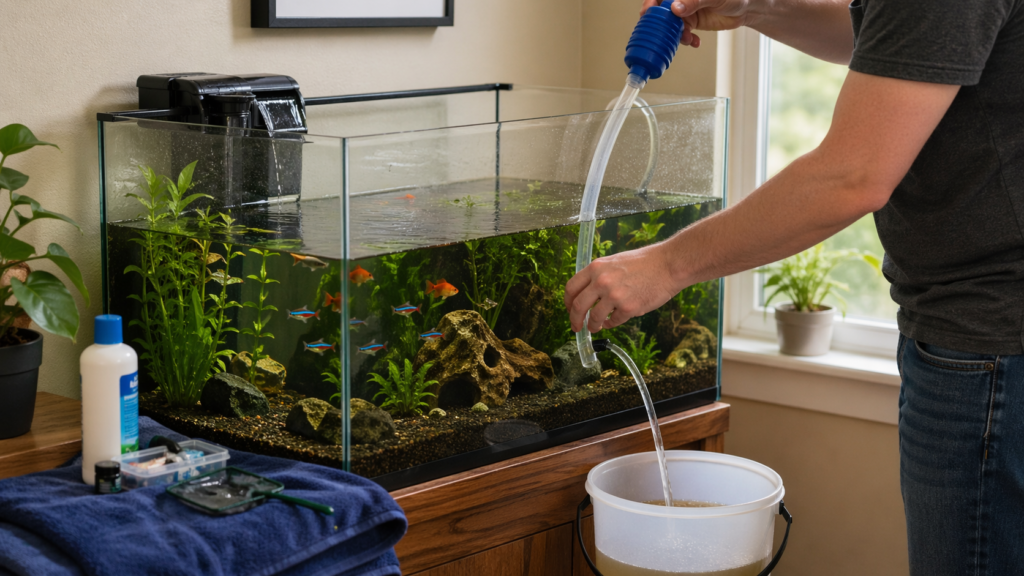
RSPCA Australia notes that partial water changes help manage nitrate, and RSPCA NSW recommends regular testing for ammonia, nitrite, and nitrate to confirm the filtration system is controlling harmful toxins. (RSPCA Knowledgebase)
Avoid tearing the entire tank apart unless there is a specific reason. Over-cleaning can disrupt beneficial bacteria and create instability.
Do Not Replace All Filter Media at Once
The filter is not just a mechanical cleaner. It is also home to beneficial bacteria that support the nitrogen cycle.
If all filter media is replaced at once, or rinsed aggressively under untreated tap water, the tank can lose a major part of its biological filtration. That can lead to ammonia or nitrite spikes.
Better practice:
- Rinse filter media gently in removed tank water.
- Replace media in stages when needed.
- Do not replace all biological media at once.
- Keep the filter running continuously.
- Avoid cleaning everything in the tank on the same day.
The goal is not to make the aquarium sterile. The goal is to keep it biologically stable.
Choose Compatible Tankmates
Fish compatibility is more than “will they look nice together?”
Fish differ in adult size, temperament, temperature requirements, water chemistry needs, feeding style, swimming level, activity level, and social behaviour. Some need groups. Some are territorial. Some nip fins. Some eat anything that fits in their mouth.
Before adding a fish, check:
- Adult size
- Temperament
- Group size
- Preferred temperature
- Water chemistry needs
- Feeding requirements
- Whether it may bully or be bullied
- Whether it may outgrow the tank
A peaceful tank is not an accident. It is planned.
Give Fish Places to Hide and Explore
Fish need more than open water.
Many species feel safer when they have plants, caves, driftwood, rockwork, floating cover, or shaded areas. Hiding is not a bad thing. It is a normal safety behaviour. Fish that feel secure often become more active and visible because they know they have somewhere safe to retreat.
Good aquarium enrichment depends on the species:
- Schooling fish need enough of their own kind.
- Bottom dwellers may need sand, smooth substrate, caves, or shaded spaces.
- Bettas often appreciate plants and calm water.
- Cichlids may need territories and visual barriers.
- Shy fish may need cover and low-stress tankmates.
- Active swimmers need open swimming space.
Design the tank around the fish’s natural behaviour, not just the decoration theme.
Watch the Fish Every Day
Daily observation is one of the best health tools you have.
You do not need to perform a full inspection every time. Just learn what normal looks like. Healthy fish usually swim normally, respond to food, hold their fins properly, breathe without obvious distress, and maintain normal colour and posture for their species.
Warning signs include:
- Gasping at the surface
- Clamped fins
- White spots
- Torn or ragged fins
- Fuzzy patches
- Open sores
- Swelling
- Pineconed scales
- Flashing or rubbing
- Loss of appetite
- Hiding more than usual
- Lethargy
- Abnormal swimming
- Sudden aggression
- Fish sitting at the bottom or hanging near the filter outflow
The RSPCA recommends buying fish only from clean, well-maintained tanks where fish are swimming normally and do not show signs such as split fins, white spot disease, open sores, or being underweight. Those same signs are also useful for owners monitoring fish at home. (RSPCA)
Test Before You Treat
When fish look unwell, it is tempting to add medication immediately. Sometimes treatment is needed, but many fish problems start with water quality, temperature, oxygenation, bullying, overcrowding, or stress.
Before treating the tank, check:
- Ammonia
- Nitrite
- Nitrate
- pH
- Temperature
- Filter operation
- Oxygenation
- Recent additions
- Signs of bullying
- Changes in food, decor, or maintenance routine
University of Florida IFAS advises that a minimum water quality screen during a fish disease outbreak should include dissolved oxygen, ammonia, nitrite, and pH, with other parameters such as alkalinity, hardness, nitrate, carbon dioxide, and chlorine also potentially relevant depending on the system. (Ask IFAS – Powered by EDIS)
Medication cannot fix a bad environment. Correct the basics first.
Quarantine New Fish Where Possible
New fish may bring parasites, bacterial infections, fungal issues, or stress-related illness into the aquarium. A quarantine tank gives new arrivals time to settle and gives the owner time to observe them before they join the main tank.
Quarantine is especially useful for established aquariums with healthy fish already living in them.
Good practice:
- Buy from clean, reputable sources.
- Avoid tanks with dead or visibly sick fish.
- Do not pour store water into your aquarium.
- Observe new fish carefully.
- Quarantine new arrivals where practical.
- Use separate nets and tools if managing a quarantine setup.
Quarantine may feel like an extra step, but it is much easier than treating an entire established tank.
Keep the Tank Calm and Predictable
Fish can be stressed by sudden changes.
Stressors may include:
- Rapid temperature changes
- Poor water quality
- Aggressive tankmates
- Overcrowding
- Loud vibration near the tank
- Bright lights switching on suddenly
- Frequent rearranging
- Inconsistent feeding
- Chasing with nets
- Poor hiding options
A calm aquarium has stable water, suitable tankmates, appropriate lighting, and a predictable routine. Stability is one of the best gifts you can give your fish.
The Main Rule: Stability Wins
Healthy fish-keeping is mostly about stability.
Stable water.
Stable temperature.
Stable filtration.
Stable stocking.
Stable feeding.
Stable maintenance.
Fish do not need constant interference. They need a well-designed system and consistent care.
Final Thought
Keeping fish healthy and happy is not about having the fanciest aquarium. It is about understanding that the aquarium is a living system.
Set it up properly. Cycle it before stocking. Choose compatible fish. Feed carefully. Test the water. Do regular partial water changes. Watch your fish every day.
A healthy aquarium is calm, stable, and built around the needs of the fish. When the water is right and the environment suits the species, fish can show natural behaviour, good colour, steady appetite, and a much better quality of life.
Suggested reference sources: RSPCA fish care guidance, RSPCA Australia aquarium water quality guidance, Merck Veterinary Manual aquatic systems guidance, and University of Florida IFAS fish health management resources.